
- New
- Out-of-Stock
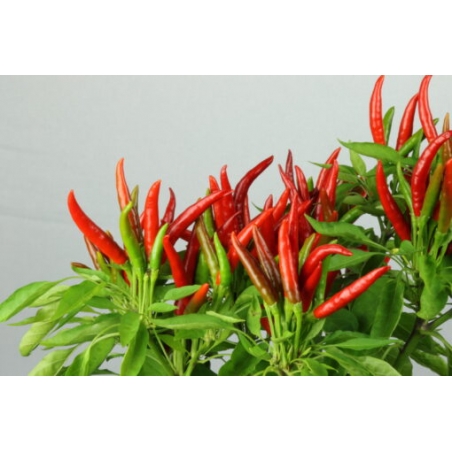

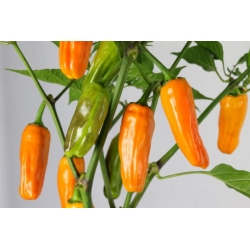
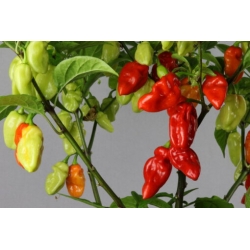
The Takanotsume (Japanese for ‘hawk’s claw’) is Japan’s best-known and most important chilli variety. It owes its name to the distinctive shape of its pods, which grow upwards, curved and tapering like the claws of a bird of prey. Although Japanese cuisine is generally known for its mild flavours, the Takanotsume is a fiery exception and an indispensable part of the traditional spice culture.
Contents: 10+ seeds
The Takanotsume is a robust and very attractive plant:
The pods are small but visually very distinctive:
For a Japanese variety, the Takanotsume is unusually hot and full of character.
In Japanese cuisine, it is a true all-rounder:
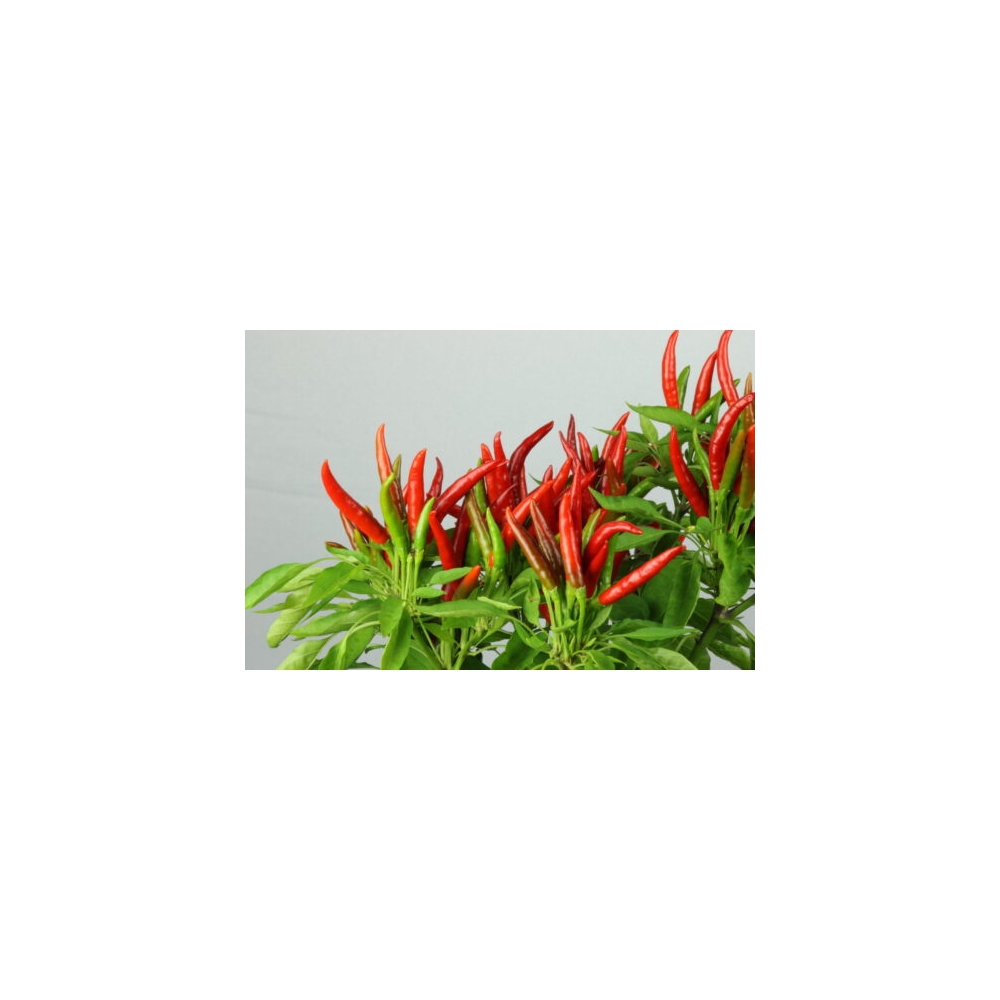
The Takanotsume (Japanese for ‘hawk’s claw’) is Japan’s best-known and most important chilli variety. It owes its name to the distinctive shape of its pods, which grow upwards, curved and tapering like the claws of a bird of prey. Although Japanese cuisine is generally known for its mild flavours, the Takanotsume is a fiery exception and an indispensable part of the traditional spice culture.
Contents: 10+ seeds
@CUSTOMER_NAME@
@AUTHOR_PROFILE@ @COMMENT_ISO_COUNTRY@@COMMENT_TITLE@
@COMMENT_COMMENT@