- The everyday hero: In Mexican cuisine, it is often used fresh and raw, particularly in salsas.
- Crisp bite: It has a very firm texture that is retained even when cooked or pickled.
- Greater heat: Compared to the jalapeño, the Serrano delivers significantly more heat with a similar aroma.
Plant characteristics
The Serrano plant is a very vigorous and robust variety:
- Growth habit: Grows upright, bushy and very branched. The stems and leaves are often slightly hairy (pubescent), which is a typical characteristic of many Serrano varieties.
- Height: Usually reaches a height of 60 to 90 cm in the garden or in a pot.
- Leaves: Dark green, rather narrow and numerous.
- Yield: The plant is extremely productive and bears copious amounts of fruit throughout the season.
The Fruit
The pods are elegant and handy:
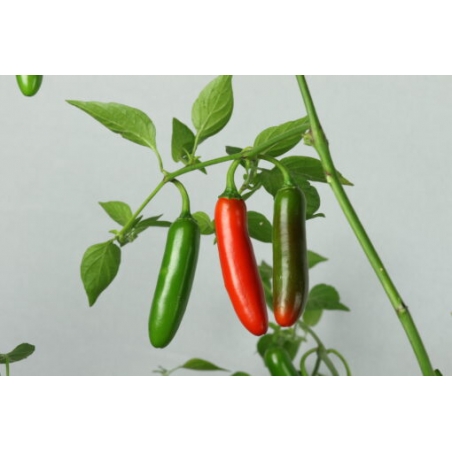
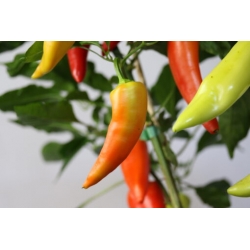
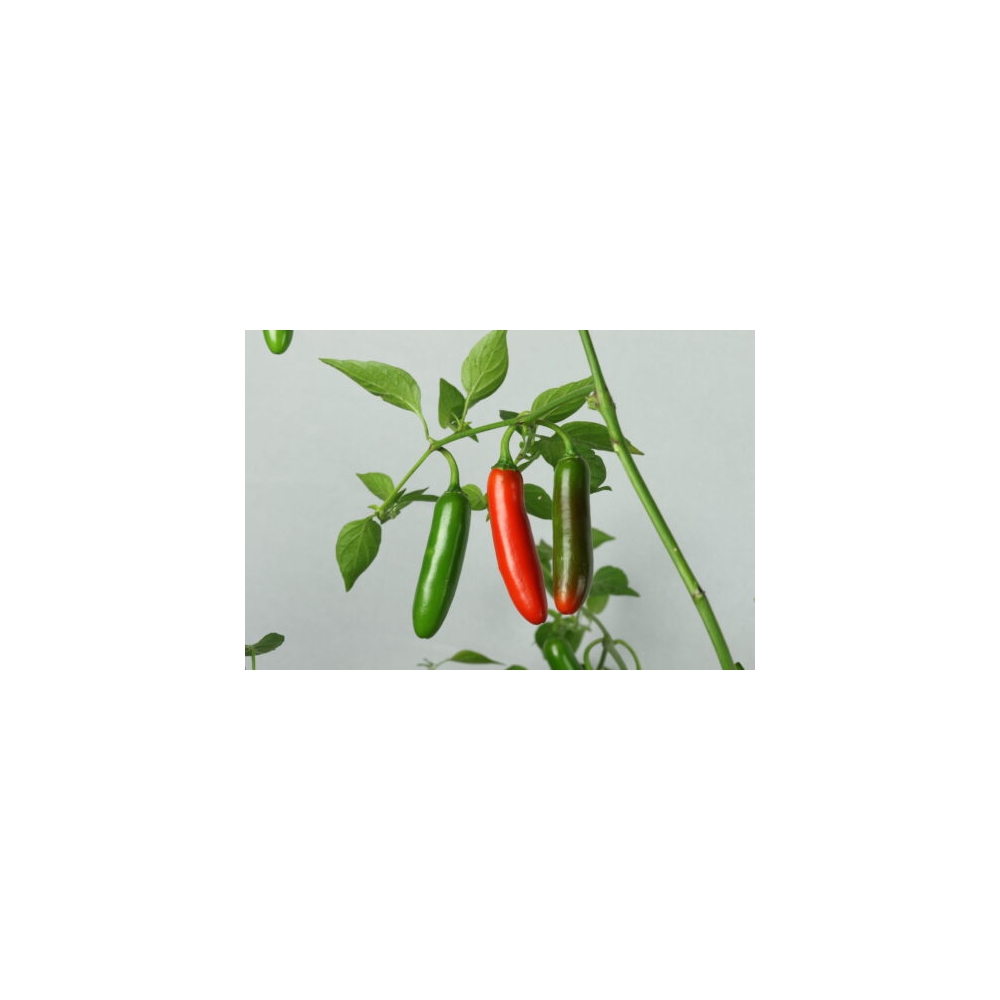
- Shape: Slender, cylindrical and rounded or slightly pointed at the tip. They grow to about 5 to 10 cm long and approx. 1 to 1.5 cm thick.
- Colour: Traditionally, they are harvested in a glossy dark green, but ripen to a bright red.
- Texture: Thick-walled and very firm. They have a smooth surface without corky cracks.
Flavour & heat level
Serranos stand out for their freshness and straightforward heat.
- Heat level: 6 to 7 (hot). On the Scoville scale, it ranges between 10,000 and 25,000 SHU (roughly two to four times as hot as a jalapeño).
- Flavour: Very fresh and ‘vegetable-like’, similar to a green pepper, but with a distinctly spicier note. When ripe, they become sweeter.
Uses
The Serrano is an indispensable ingredient in authentic Tex-Mex cuisine:
- Pico de Gallo: Finely diced with tomatoes, onions and coriander, it forms the basis of this classic fresh salsa.
- Salsa Verde: Roasted or cooked together with tomatillos, it makes a fantastic green sauce.
- Pickling: Due to its firm texture, it is ideal for pickling in vinegar.
- Frying & Grilling: Whole pods can be briefly roasted in a pan to serve as a spicy side dish.
Technical details
- Type: Capsicum annuum
- Contents: 10+ seeds
- Heat level: 6–7 (Hot)
- Sowing: February to April (start indoors)
- Maturation time: approx. 75–85 days
- Location: Full sun and warm; it is considered slightly more heat-tolerant than some other annuum varieties.
@CUSTOMER_NAME@
@AUTHOR_PROFILE@ @COMMENT_ISO_COUNTRY@@COMMENT_TITLE@
@COMMENT_COMMENT@