• New
Sativa Rheinau Caraway – Seeds
search
  • Sativa Rheinau Caraway – Seeds
  • Sativa Rheinau Caraway – Seeds

Sativa - Caraway – Seeds

1467
CHF4.20
Tax included

The time-honoured culinary wonder (Carum carvi)

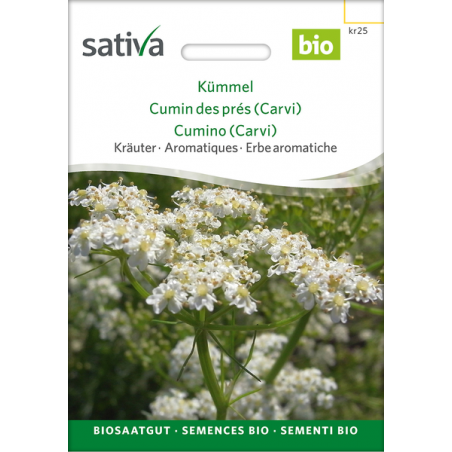
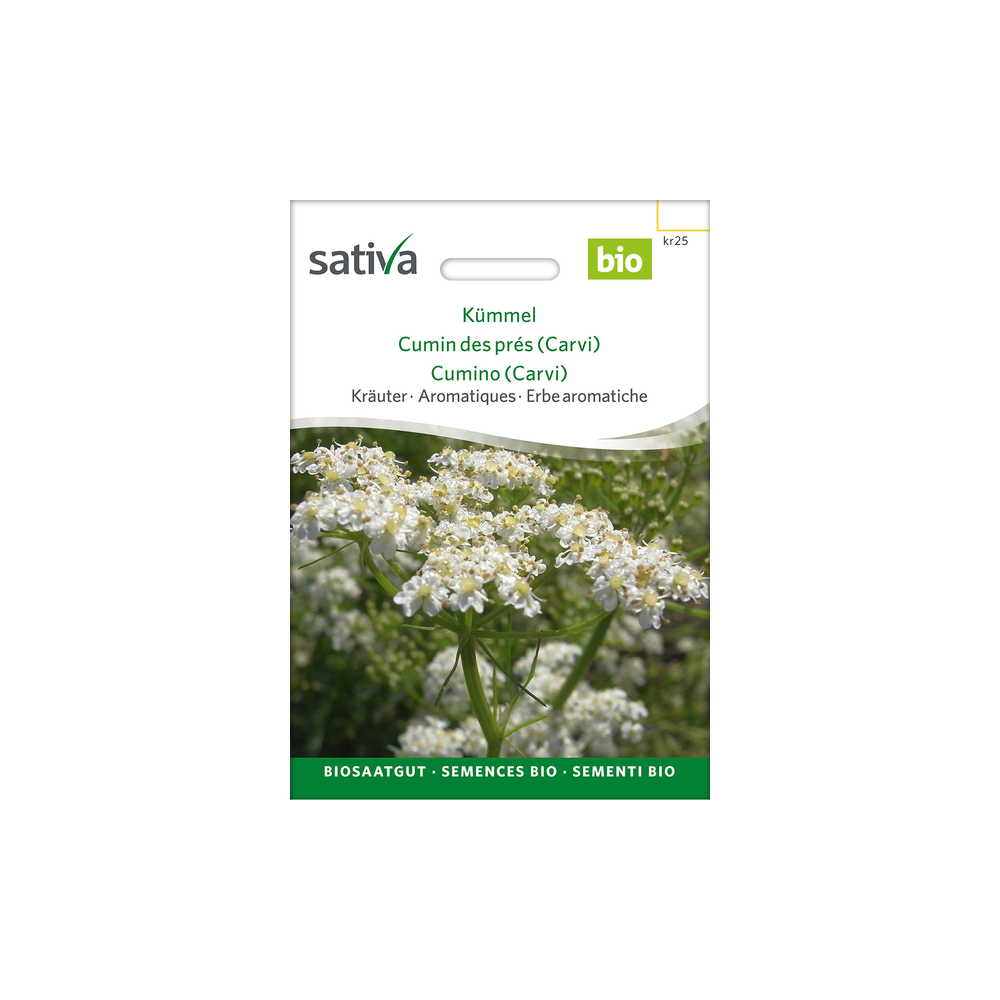
Caraway is one of Europe’s oldest spices and an indispensable ingredient in savoury cuisine. As a biennial plant, it takes its time in the garden: in its first year, it concentrates its energy into a leaf rosette close to the ground and a strong taproot. In the second year, it then shoots up to 60–80 cm in height and forms delicate, white umbel flowers, which produce the sought-after, highly aromatic seeds in midsummer.

Certified organic seeds – sustainable and environmentally friendly.

Contents: 2.5g of seeds per packet

Quantity
In Stock

Vision, Basel: 2
Greendoor, Aesch: 2

  • Aromatic powerhouse: The seeds are known for their distinctive flavour and their beneficial effect on digestion, particularly after heavy meals.
  • Versatile: In addition to the seeds, the young leaves in spring (delicious in quark) and even the taproot (as a root vegetable) are edible.
  • Hardy nature: Caraway is completely frost-hardy and copes very well with local winters.

Cultivation & Location

Caraway is easy to grow, but needs a permanent spot for two years:

  • Location: Prefers sunny to semi-shaded spots. It prefers heavy, moist and nutrient-rich soil, but thrives almost anywhere.
  • Sowing: Direct sowing in spring is ideal. As caraway forms a taproot, it does not take kindly to being transplanted.
  • Harvest: Seed maturity can be recognised in July of the second year, when the umbels turn brown. It is best to cut the entire umbels early in the morning (when they are still slightly damp with dew to prevent seed loss) and leave them to ripen upside down.

Key planting information

  • Botanical name: Carum carvi
  • Life cycle: Biennial
  • Sowing depth: 1–2 cm (dark germinator)
  • Spacing within the row: 5 cm
  • Spacing between rows: 30 cm
  • Nutrient requirements: Low to medium

Culinary uses

  • Spice: A classic accompaniment to cabbage dishes, bread, potatoes or meat dishes.
  • Tea: Crushed seeds make a mild, digestive tea (often combined with fennel and aniseed).
  • Fresh leaves: The delicate leaves in the first year taste similar to parsley with a slight hint of caraway and are wonderful in salads.

Ecological contribution: Bee-friendly

Although primarily known as a spice, caraway is a valuable bee forage in its second year. Its flat umbels offer hoverflies, small wild bees and beetles an easily accessible landing spot with a rich supply of nectar.
Sativa
1467
4 Items
@COMMENT_AVATAR@

@CUSTOMER_NAME@

@AUTHOR_PROFILE@ @COMMENT_ISO_COUNTRY@
@VERIFY_PURCHASE@
(@COMMENT_GRADE@)
@COMMENT_DATE@
@COMMENT_NO_APPROVE@

@COMMENT_TITLE@

@COMMENT_COMMENT@

@COMMENT_IMAGES@
@COMMENT_VIDEOS@
Is this helpful? @COMMENT_USEFUL_ADVICES@ @COMMENT_NOT_USEFUL_ADVICES@ @COMMENTS_NB@ Write a comment
@COMMENT_AVATAR@

@CUSTOMER_NAME@

@AUTHOR_PROFILE@ @COMMENT_ISO_COUNTRY@
@VERIFY_PURCHASE@
@COMMENT_DATE@
@COMMENT_NO_APPROVE@

@COMMENT_COMMENT@

@COMMENT_USEFUL_ADVICES@ @COMMENT_NOT_USEFUL_ADVICES@ @REPLIES_NB@ Reply
@COMMENT_AVATAR@

@CUSTOMER_NAME@

@AUTHOR_PROFILE@ @COMMENT_ISO_COUNTRY@
@VERIFY_PURCHASE@
@COMMENT_DATE@
@COMMENT_NO_APPROVE@

@COMMENT_COMMENT@

@COMMENT_USEFUL_ADVICES@ @COMMENT_NOT_USEFUL_ADVICES@ Reply